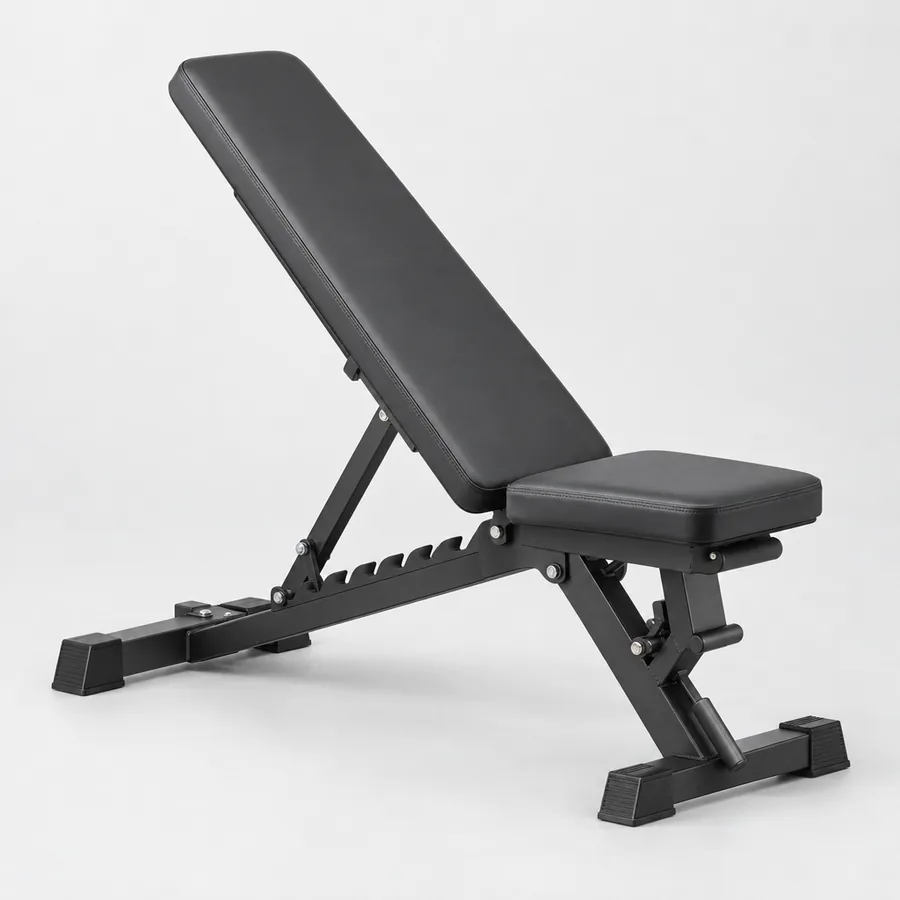
Adjustable Weight Bench
Flat, incline or decline on one frame. What load ratings, pad gaps, backrest angles and footprint tell you about an adjustable weight bench.
See prices on Amazon
Price and availability are shown on Amazon and can change. As an Amazon Associate we earn from qualifying purchases.
Flat, incline and sometimes decline: an adjustable bench covers them all by hinging the backrest, and often the seat, on a ladder or pin system. It decides which dumbbell and barbell exercises are comfortable at home, so shape and stability deserve a close read.
What to look for
- A load rating that counts your body weight plus everything in your hands.
- Only a small gap between seat and back pad when the bench is set flat.
- Pad width that supports the shoulder blades yet leaves room to lower your arms.
- A base wide enough to stay planted when you lean to one side.
- Backrest positions that include a modest incline as well as a steep one.
Who it suits
Home trainers building a dumbbell corner, and barbell lifters with a separate rack. Where the spare room doubles as an office, a folding frame on wheels earns its keep, though fixed frames tend to feel firmer.
Before you buy
- Measure the space with the backrest raised, as the footprint changes.
- If it has to slide into a rack, compare its leg width with the gap between the uprights.
- Find out how much assembly is involved and which tools arrive in the box.
See prices on Amazon
Price and availability are shown on Amazon and can change. As an Amazon Associate we earn from qualifying purchases.
Check the seller's own photos, sizes and reviews on Amazon before you order.