Cast Iron Kettlebell
Handle shape, casting, coating and base: a short guide to choosing a cast iron kettlebell for swings, goblet squats and presses at home.
See prices on Amazon
Price and availability are shown on Amazon and can change. As an Amazon Associate we earn from qualifying purchases.
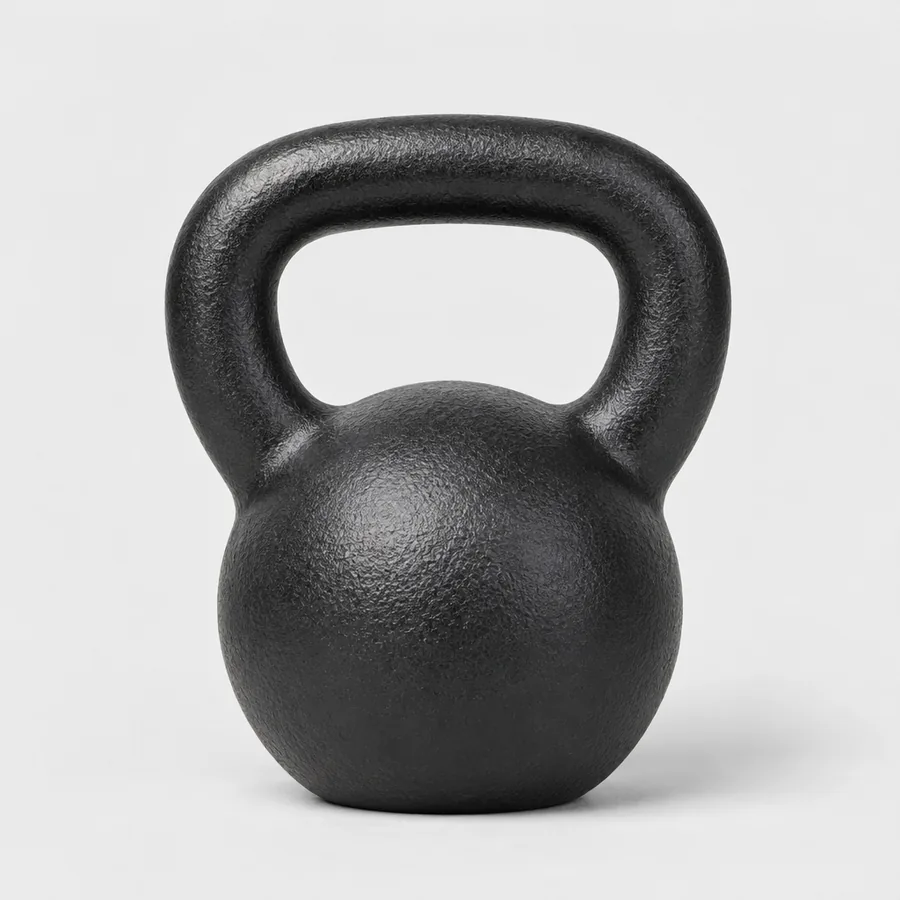
A cast iron kettlebell is a ball of metal with a looped handle, and its off-centre weight is what makes swings, cleans and goblet squats feel different from the same moves done with a dumbbell. Unlike steel competition bells, which share one size, cast iron ones grow as they get heavier.
What to look for
- A single-piece casting, with no weld line where the handle meets the body.
- Enough handle width for two hands, if swings are the plan.
- A smooth inner edge, free of sharp seams left over from the mould.
- A finish to match the setting: powder coat holds chalk, enamel feels slicker, vinyl is gentler on floorboards.
- A flat base that stands without rocking.
Who it suits
Beginners learning a handful of movements, runners and riders adding strength work, and lifters who want one tool that lives in a corner. People planning long sets of snatches often prefer the uniform shape of a competition bell.
Before you buy
- See that the weight is given in kilograms; some listings convert from pounds and land on odd figures.
- Think about which lift comes first, since swings usually call for a heavier bell than overhead presses.
- Plan for the floor, because bare iron chips tiles and dents timber.
See prices on Amazon
Price and availability are shown on Amazon and can change. As an Amazon Associate we earn from qualifying purchases.
Check the seller's own photos, sizes and reviews on Amazon before you order.